
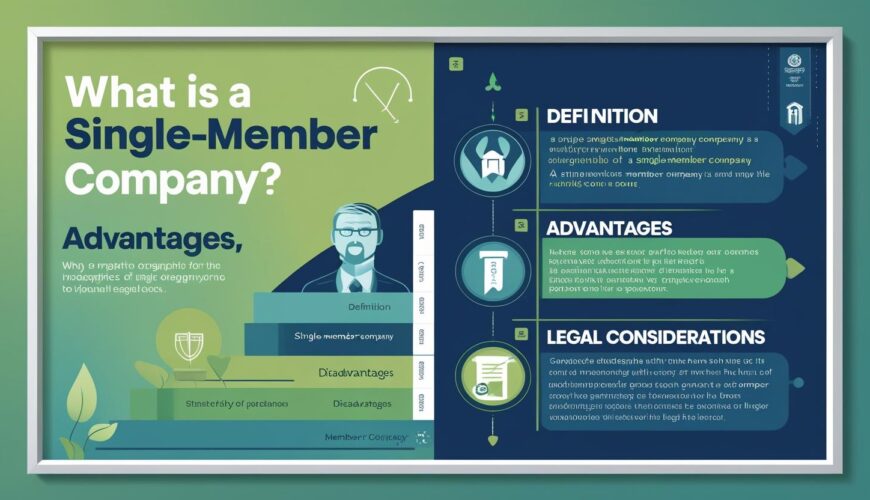
Understanding the Concept, Formation, and Benefits of a Single Member Company (SMC) in Pakistan
In today’s dynamic business environment, entrepreneurs and small business owners in Pakistan are constantly looking for ways to operate efficiently, legally, and securely. One such modern business structure is the Single Member Company (SMC) — a type of private company formed with just one person as the sole owner and director. If you’re a sole proprietor or a startup founder, understanding what an SMC is can be a game changer for your business.
In this article, we’ll explore what a Single Member Company is, its legal framework in Pakistan, advantages, disadvantages, and how you can register one.
What Is a Single Member Company (SMC)?
A Single Member Company (SMC) is a type of private limited company that is owned and managed by a single individual. It was introduced under the Companies Ordinance, 1984 (now repealed and replaced by the Companies Act, 2017) to provide sole proprietors a legal entity with limited liability protection.
An SMC enjoys a separate legal identity from its owner, meaning the business and the owner are treated as two different legal persons. This allows the owner to protect their personal assets from the liabilities of the business.
Legal Definition Under Pakistani Law
According to Section 2(63) of the Companies Act, 2017:
“A ‘single member company’ means a private company which has only one member and is registered as such.”
This type of company is governed by special rules under the Single Member Companies Rules, 2003, and regulated by the Securities and Exchange Commission of Pakistan (SECP).
Key Features of a Single Member Company
- Only One Member: The company has only one shareholder and director at the time of incorporation.
- Limited Liability: The personal assets of the owner are protected in case of debts or legal issues.
- Perpetual Succession: The company continues to exist even after the death or exit of the owner.
- Nominee Director: A nominee must be appointed at the time of registration to take over in case of death/incapacity of the single member.
- Legal Status: It is a separate legal entity and can sue or be sued in its own name.
Advantages of a Single Member Company
- Limited Liability
The owner is not personally liable for the debts of the company beyond their investment. - Separate Legal Entity
The company has its own legal identity, bank account, and seal. - Ease of Ownership and Control
One person has complete control, making decision-making efficient and streamlined. - Credibility and Trust
Clients and suppliers often view SMCs as more credible than sole proprietorships. - Continuity of Business
With a nominated director, the company can survive the owner’s death or incapacity. - Tax Benefits
Companies may avail different tax rates and allowances compared to individuals.
Disadvantages of a Single Member Company
- Compliance Requirements
SMCs must comply with SECP regulations, file annual returns, and maintain company records. - Cost of Maintenance
Costs related to company registration, tax filing, and legal compliance can be higher. - Limited Investment Opportunities
Since there’s only one member, raising capital from external shareholders is restricted.
Who Should Register a Single Member Company?
A Single Member Company is ideal for:
- Freelancers
- Startup founders
- Consultants
- Traders and e-commerce sellers
- Professionals offering legal, IT, or financial services
If you’re operating as a sole proprietor and want to limit your personal liability while enjoying a corporate identity, forming an SMC is highly recommended.
How to Register a Single Member Company in Pakistan
Here is a step-by-step guide to SMC registration with the SECP:
1. Name Reservation
- Apply through SECP’s eServices portal
- The name should be unique and not prohibited under the law.
2. Prepare Documents
- Memorandum and Articles of Association (MOA/AOA)
- CNIC of the sole member and nominee
- Nominee consent and affidavit
- Form 29 (particulars of director)
- Form 21 (registered office address)
3. Pay Registration Fee
- Pay online or through designated banks
- Fee varies depending on the authorized capital
4. Submit Online Application
- Upload scanned copies of documents via SECP portal
- Track application status online
5. Certificate of Incorporation
- Once approved, SECP issues a Certificate of Incorporation
- The company is now legally recognized
Post-Incorporation Requirements
After registration, the SMC must:
- Open a company bank account
- Register with FBR for NTN and sales tax (if applicable)
- Maintain accounting records
- File annual returns and financial statements
- Hold annual general meetings (optional for SMC but good practice)
Difference Between SMC and Sole Proprietorship
| Feature | Single Member Company (SMC) | Sole Proprietorship |
|---|---|---|
| Legal Entity | Separate legal entity | Not separate from the owner |
| Liability | Limited | Unlimited |
| Regulation | Regulated by SECP | Not regulated |
| Credibility | Higher | Lower |
| Ownership | One owner with nominee | Single owner |
| Compliance | High | Low |
| Continuity | Ensured with nominee | Ends with the owner’s death |
FAQs About Single Member Company
Q1: Can a foreign national register an SMC in Pakistan?
Yes, a foreign national can incorporate an SMC subject to approval and legal compliance.
Q2: Can I convert an SMC into a private limited company?
Yes, once more shareholders are added, it can be converted into a private limited company with SECP’s approval.
Q3: Is audit mandatory for a Single Member Company?
If the SMC has a paid-up capital exceeding Rs. 1 million, it must appoint an auditor.
Q4: What is the minimum capital required?
There is no minimum capital requirement, but most SMCs start with Rs. 100,000 authorized capital.
Q5: Who is a nominee director?
A nominee is a person designated to manage the company if the sole owner dies or is incapacitated.
Conclusion
A Single Member Company (SMC) offers an ideal structure for individuals looking to formalize their business operations while enjoying limited liability and legal recognition. Whether you’re an IT consultant, online seller, or startup founder, registering an SMC is a smart move toward growth, compliance, and credibility.
Need Legal Help?
If you’re planning to register a Single Member Company in Pakistan or need help with compliance, The Lawyers can assist you with end-to-end legal and corporate services.
📞 Call us: +92-0336-6050615
📧 Email: info@thelawyers.pk
Let our experts take care of your registration, documentation, and SECP compliance — so you can focus on growing your business.